
Cultural analysis · Music and connections across media
Sometimes, a few notes are all it takes.
A guitar brings back the intimacy of Life is Strange. A voice suspended in silence brings the landscapes of Death Stranding into view. The opening seconds of I Really Want to Stay at Your House, and Night City is no longer quite like any other city.
What returns is more than a melody. It is a situation, a relationship between two characters, sometimes an emotion we would struggle to put into words any other way.
Music becomes a way to return to a story after we have left it. And that relationship can have tangible effects: artists discovered by new audiences, songs played again on a massive scale, concerts devoted to a fictional world. We still need to distinguish what the figures show from what they cannot demonstrate.
Life is Strange: an identity you hear as much as you play
In Life is Strange, songs contribute to our sense of closeness to the characters: less a soundtrack constantly signalling spectacle than a space where waiting, uncertainty and memories can unfold.
Feel For Music, which has supervised the franchise’s music since 2015 , describes precisely that aim: building a recognisable identity that feels true to the characters while evolving from one instalment to the next. José González and Foals are among the artists featured across the series.
For Before the Storm, the collaboration with Daughter goes further: the band composed the album Music from Before the Storm around the game’s world and characters. In its case study consulted on 31 October 2026, Feel For Music reports more than 135 million Spotify streams for the album .
That is a cumulative stream count reported by a participant in the project, not 135 million people or a measure of how many listeners the game directly brought to the album. But the continuation is real: what accompanied an adventure also becomes an album you can take with you.
Clair Obscur: when the soundtrack leaves the screen
Clair Obscur: Expedition 33 adds another stage to that journey. Its music lives on in the official concert A Painted Symphony, led by Lorien Testard, Alice Duport-Percier and the Orchestre Curieux. Following an initial run of performances reported as sold out, Kepler announced an international tour for 2027 in September 2026.
You are no longer simply listening to a memory again. You are choosing a new cultural experience, in a concert hall, with other people. The soundtrack becomes an event in its own right.
Death Stranding: the power of the moment when music begins
A song’s power does not depend solely on its musical qualities. It also depends on when it arrives.
In Death Stranding, certain journeys take on a particular quality when a track emerges after a stretch dominated by walking and environmental sounds. The landscape has not changed. Yet the way we look at it shifts.
The game’s musical world combines Ludvig Forssell’s compositions with songs by Low Roar, Silent Poets and CHVRCHES . This coexistence reminds us that a soundtrack can involve both music created for a game and a careful selection of artists.
Music does not necessarily underline a spectacular event: it can make a journey matter. It turns time spent playing into a moment we remember.
It is also a gateway to another artist’s world. A player might look up the song they heard, then discover the rest of an album. We do not need to attribute an unverifiable numerical increase to Low Roar to understand that possibility: the game offers a listening context that the song then carries with it.
Cyberpunk: Edgerunners: the same song, a different meaning
With Cyberpunk: Edgerunners, the connection becomes particularly clear. I Really Want to Stay at Your House, performed by Rosa Walton and featured in the musical world of Cyberpunk 2077, takes on a central role in our perception of David and Lucy’s story. Netflix and CD Projekt RED released an official music video combining the song with footage from the anime .
The track does not need to change for its meaning to change.
Heard as a radio song in the game, it can become, after watching the series, an immediate reminder of a relationship and what is at stake. Returning to Night City then means revisiting familiar places with an additional memory.
The series’ success also accompanies a commercial resurgence for the game. In its third-quarter 2022 report, CD Projekt attributes a measurable impact on sales to the popularity of Edgerunners and the positive reception of update 1.6. The group says it passed 20 million cumulative buyers at the end of September: that total is therefore not the number of sales caused by the anime.
Still less does it measure the effect of the song alone. The point of this example is not to construct a simplistic causal story, but to see how music can strengthen the emotional continuity between two works.
The Last of Us: a musical identity across media
The Last of Us offers another kind of continuity. Gustavo Santaolalla, who composed the music for the games, returns to Joel and Ellie’s world for the HBO series, which he scores alongside David Fleming. In the introduction to the first season’s soundtrack, he describes this work as an expansion of the music developed and recorded for the first game .
For those who have played, that familiar sound can connect two versions of the same story. The cast, direction and pacing offer a different experience; the music lets us rediscover a familiar sensibility. An adaptation can thus preserve part of a work’s identity through what it lets us hear.
Stranger Things: a new stage for an older song
The movement can also lead from a series to an artist’s back catalogue.
In 2022, the fourth season of Stranger Things brought new exposure to Running Up That Hill, Kate Bush’s 1985 song. Spotify reports an increase of more than 8,700% in global streams , recorded on 30 May after the season’s launch. This is a point-in-time comparison reported by the platform, not annual growth or a measure covering every music service.
What sets this apart from simply putting a song back in the spotlight is its place in the narrative. It is not just there to evoke an era: it becomes a reference point in Max’s story.
A familiar song can thus take on a new collective memory. For some people, it remains associated with the first time they heard it. For others, it evokes the series first. These readings do not cancel each other out: they accumulate.
An audiovisual work can alter a song’s trajectory, just as a song can alter our memory of a work.
Twilight: can a soundtrack exist without being in the book?
A novel does not usually start playing a song when you turn a page. That does not mean music plays no part in its creation.
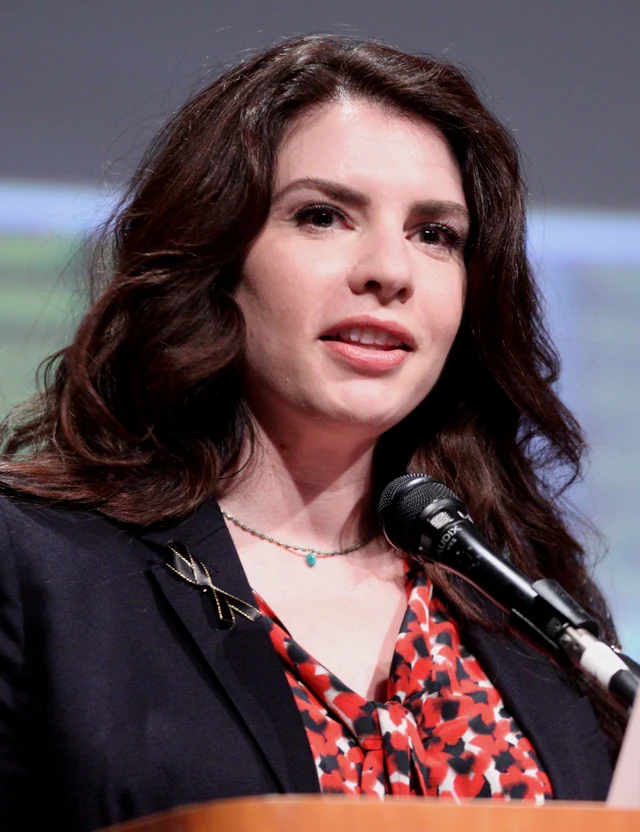
On her official website, Stephenie Meyer explains the role music plays in her writing and shares a playlist for Twilight . It includes Radiohead, Muse, Coldplay, Linkin Park and The Cranberries. She presents the selection as a way to approach the emotions and scenes she imagines. This is the novel’s playlist, which should not be confused with the soundtrack to its film adaptation.
The connection is interesting precisely because it is optional. Readers can listen to these tracks, discover them after finishing the book, or imagine an entirely different atmosphere.
The playlist opens a door into the author’s creative process; it is not a set of instructions imposed on the novel.
Nor does it prove that music increased the book’s sales. Its contribution lies elsewhere: a written story can have a sonic character, even when its medium never plays a sound.
What these examples tell us about our tastes
These works do not necessarily share a genre. Yet music helps us notice connections between them: a fragile intimacy, contemplative solitude, rebellious energy, a sense of loss.
That does not mean every Life is Strange fan will enjoy Death Stranding. Two works can share an atmosphere while offering very different rhythms, demands and experiences.
But it changes the question we ask after a memorable discovery. Instead of only asking “What other game belongs to the same genre?”, we can ask: “What would I like to experience again?”
The setting? The relationship between the characters? The feeling of moving through something greater than yourself? Another work can answer that desire without sharing the same format.
Gemster: following an affinity across boundaries
This approach to discovery reflects Gemster’s vision: a person’s tastes should not be reduced to a single category of content.
With Echo, you can start from a specific work to explore affinities, including across media; Expedition draws more broadly on your tastes.
The parallel with music illustrates that vision; it is not an announcement that our engine automatically analyses soundtracks. A cultural affinity cannot be reduced to a shared song, and an algorithmic connection cannot capture everything that moves us.
But that limitation makes the idea all the more interesting: categories are starting points, not walls. You can look for a kind of melancholy in a novel that you first encountered in a game, or for an intensity in a film that you discovered through a manga.
What connects two works is not always the stories they tell. Sometimes it is what we would like to feel again.
What song immediately takes you back to a film, a series or a game?
Also on the blog: The cross-media domino effect.
Sources consulted on 31 October 2026, supplemented on 2 November 2026 for the passage on The Last of Us. Figures are tied to their period and scope; the aesthetic connections reflect the analysis proposed in this article.
Gemster - What should you watch, read or play after a favourite?. Public explanation of Echo and the distinction between recommendations and adaptation links.
Sources and references
- Feel For Music - Life is Strange case study. Music supervision, collaborations and 135 million cumulative Spotify streams for Daughter’s album. Figure reported by the music supervisor; undated page.
- Kepler Interactive - A Painted Symphony, 2027 international tour, 9 September 2026. Tour announcement and recap of the first concerts; information from the organiser/publisher.
- PlayStation - Death Stranding. Official presentation and music credits.
- Netflix - official I Really Want to Stay at Your House music video, 2022. The video contains footage that reveals plot details.
- CD Projekt - third-quarter 2022 report, 28 November 2022. Combined effect of the anime and the update; 20 million cumulative buyers.
- Spotify Newsroom - Stranger Things and Running Up That Hill, 29 June 2022. Point-in-time increase in streams recorded on 30 May.
- Stephenie Meyer - Twilight Playlist. The author’s account and official playlist associated with the book.
- Milan Records - The Last of Us, season 1 soundtrack. Credits for Gustavo Santaolalla and David Fleming, and the composer’s account of expanding the game’s music for the series.
- Photo: Creatopy / Unsplash
- Image licence: Unsplash
- Photo: musicator / Wikimedia Commons
- Image licence: CC BY 3.0
- Photo: Gage Skidmore / Wikimedia Commons
- Image licence: CC BY-SA 3.0