
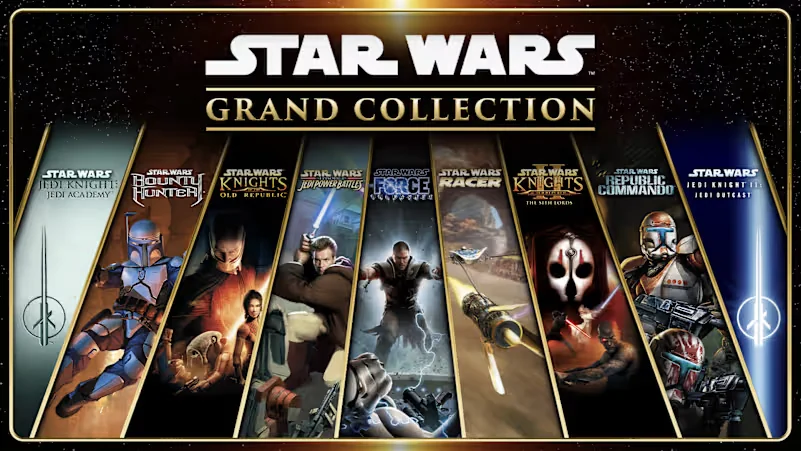
For a while, Star Wars games mostly lived off their past. People would bring up Knights of the Old Republic, the old Battlefront games, Rogue Squadron and podracing. The present seemed less certain: a handful of big releases, projects that were cancelled or went quiet, and plenty of questions about the direction Lucasfilm Games was taking.
The picture is starting to change. Not because one Star Wars game has suddenly solved everything, but because the franchise is rediscovering what made it strong: it lends itself to very different genres.
In just a few years, Star Wars has offered a major Jedi adventure, a smuggler's open world, a turn-based tactics game and a futuristic racing game. That is a striking range. It says something more interesting than a simple return to form: the galaxy is becoming a playground again.
Star Wars is no longer looking for one definitive game
The problem with many major franchises is familiar. When one format works, everyone wants to reproduce it. A successful action-adventure gets a sequel. An open world leads to another open world. A multiplayer game gets a new season, then a new shop, then a roadmap.
Star Wars long avoided that pattern. At its best, the universe could accommodate a flight simulator, a racing game, a party-based RPG, a shooter or a Jedi-focused adventure. That variety seemed to have been lost.
It is slowly returning.
The recent line-up is not perfect, and it does not yet form a coherent whole. But it suggests a healthier ambition: entrusting different corners of the galaxy to different studios, with different rules of play. A strategy fan does not want the same thing as a lightsaber enthusiast. Someone who wants to explore planets on a speeder is not necessarily looking for a choice-driven RPG.
That sounds obvious on paper. It is far less obvious in an industry that happily turns every familiar franchise into endless variations of the same product.
Zero Company: Star Wars from the ground
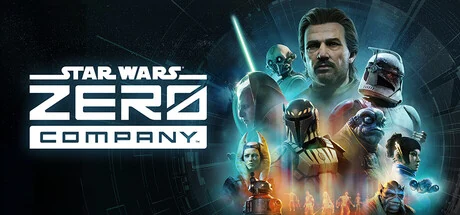
Star Wars Zero Company may be the clearest example of this shift. Released on August 27, 2026, the game moves away from the lone hero and grand spectacle to focus on a squad operating in the shadows of the Clone Wars. Developed by Bit Reactor with Electronic Arts and Lucasfilm Games, it is a single-player, turn-based tactics game for PC, PlayStation 5 and Xbox Series X|S.[1][2][3]
You play as Hawks, a former Republic officer. Around him is an unlikely team: clones, a Mandalorian, a Tognath Padawan and specialists recruited throughout the adventure. Their mission is to investigate the Infinite Coil, a threat operating on the fringes of the conflict between the Republic and the Separatists.[3]
The comparison with XCOM makes sense. Every mission asks you to consider character positioning, abilities, the risks you take and how the squad will survive the next turn. But the game's appeal extends beyond its combat system.
It shows a side of Star Wars rarely given centre stage: ordinary fighters, covert operations and alliances of convenience. In a universe accustomed to Jedi, Sith and huge battles, the change of scale is welcome.
Zero Company also takes place before Star Wars Jedi: Fallen Order. Its story unfolds towards the end of the Clone Wars, before Order 66 and therefore before Cal Kestis's story. It should not be treated as a direct prequel to the Jedi series, since it tells an independent story. But the two games share a pivotal period: the collapse of the Republic and the rise of the Empire.[3][4][5]
That matters. Star Wars works particularly well when different works tell different stories within the same period, rather than trying to send every character through the same events.
Galactic Racer puts speed back at the centre
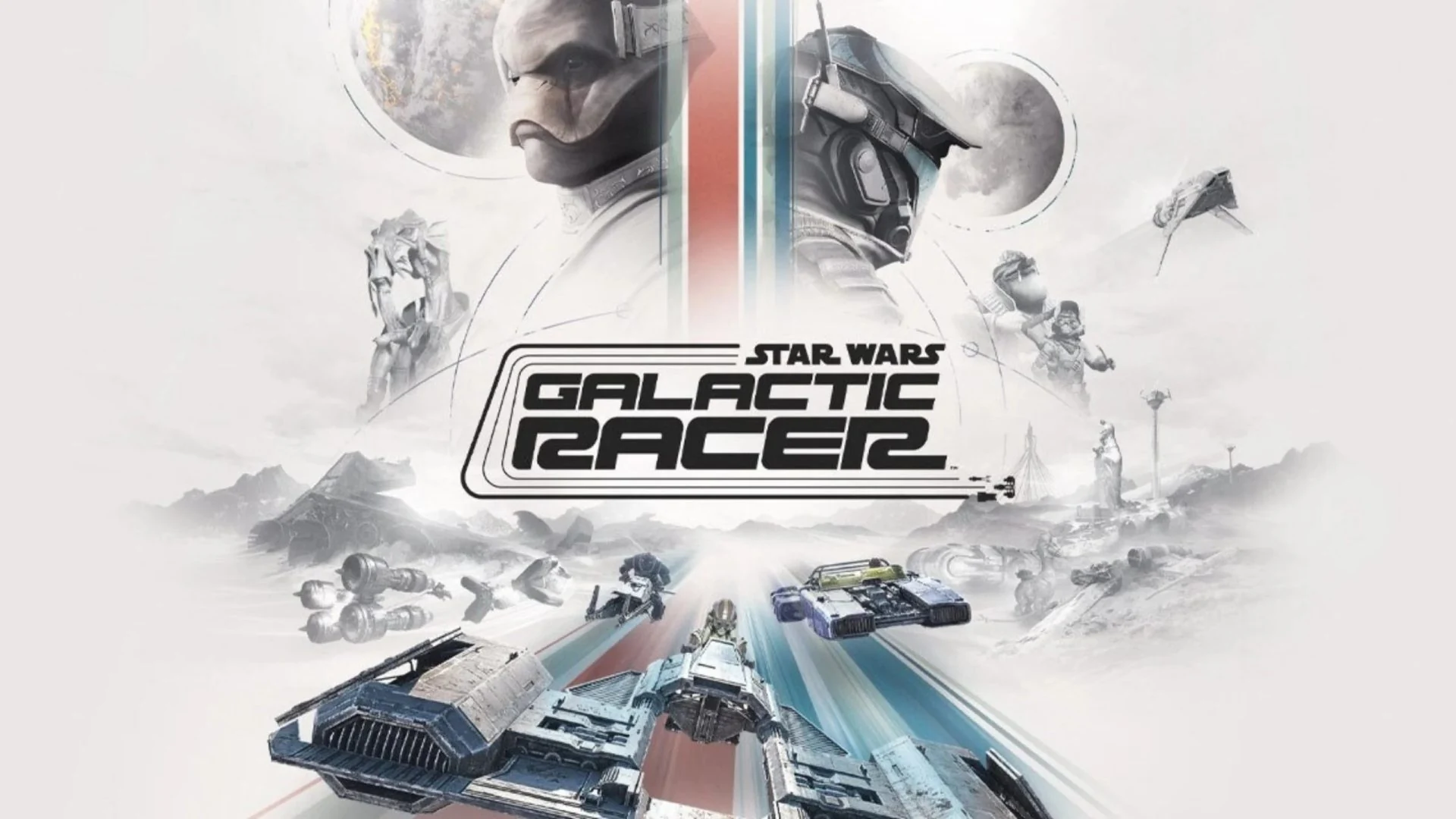
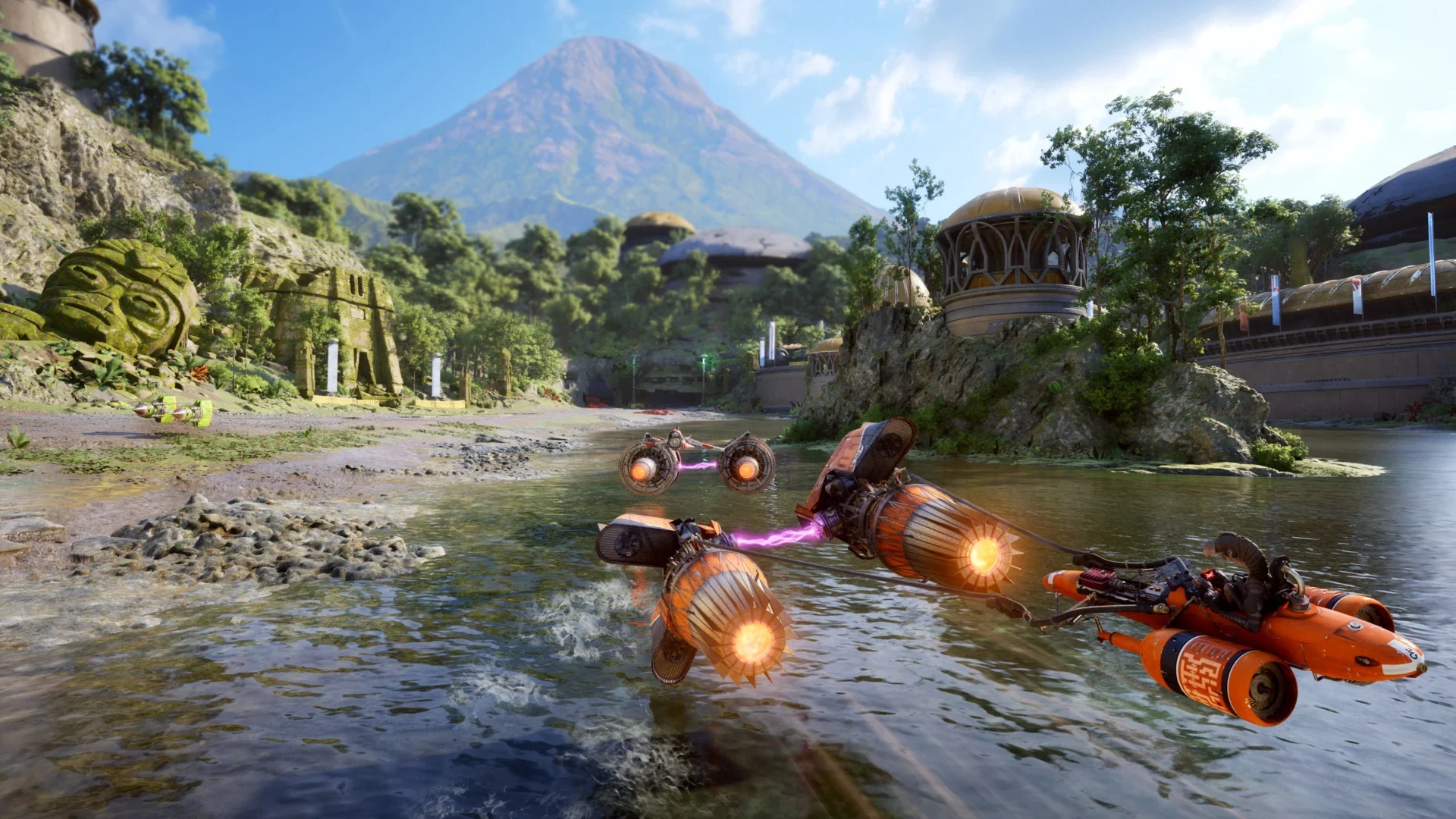
Released on October 6, 2026, Star Wars: Galactic Racer revives another idea the franchise had almost abandoned: Star Wars can also make a very good racing game.[29]
The game is available on PlayStation 5, Xbox Series X|S and PC. It follows Shade, a racer entering the Galactic League, an underground circuit in the most dangerous reaches of the Outer Rim. Its structure combines a campaign, scenario challenges and an arcade mode.[6][7][8][29]
That might seem less significant than projects such as Eclipse or the KOTOR remake. Yet it is an important sign. Speed, vehicles and racing have been part of Star Wars' visual language since the earliest films. Speeder bikes, space chases and the podrace in The Phantom Menace have all left their mark on the saga. Video games once captured that potential very well, particularly through podracing.
The first reviews were especially encouraging. As of October 2, 2026, Galactic Racer had a Metacritic score of 88/100 from 44 reviews, alongside an OpenCritic score of 87. Reviews praised its sense of speed, progression and attention to the environments. Some critics did, however, mention a risk of repetition during longer sessions.[9][10][11]
Those figures reflect the press reviews gathered before launch. The game is now available, but they should not be confused with a long-term assessment of players' experiences. The broader point already stands: Star Wars is credible again in a genre few people necessarily expected to see return at this level.[29]
Jedi laid the foundations; Outlaws widened the frame
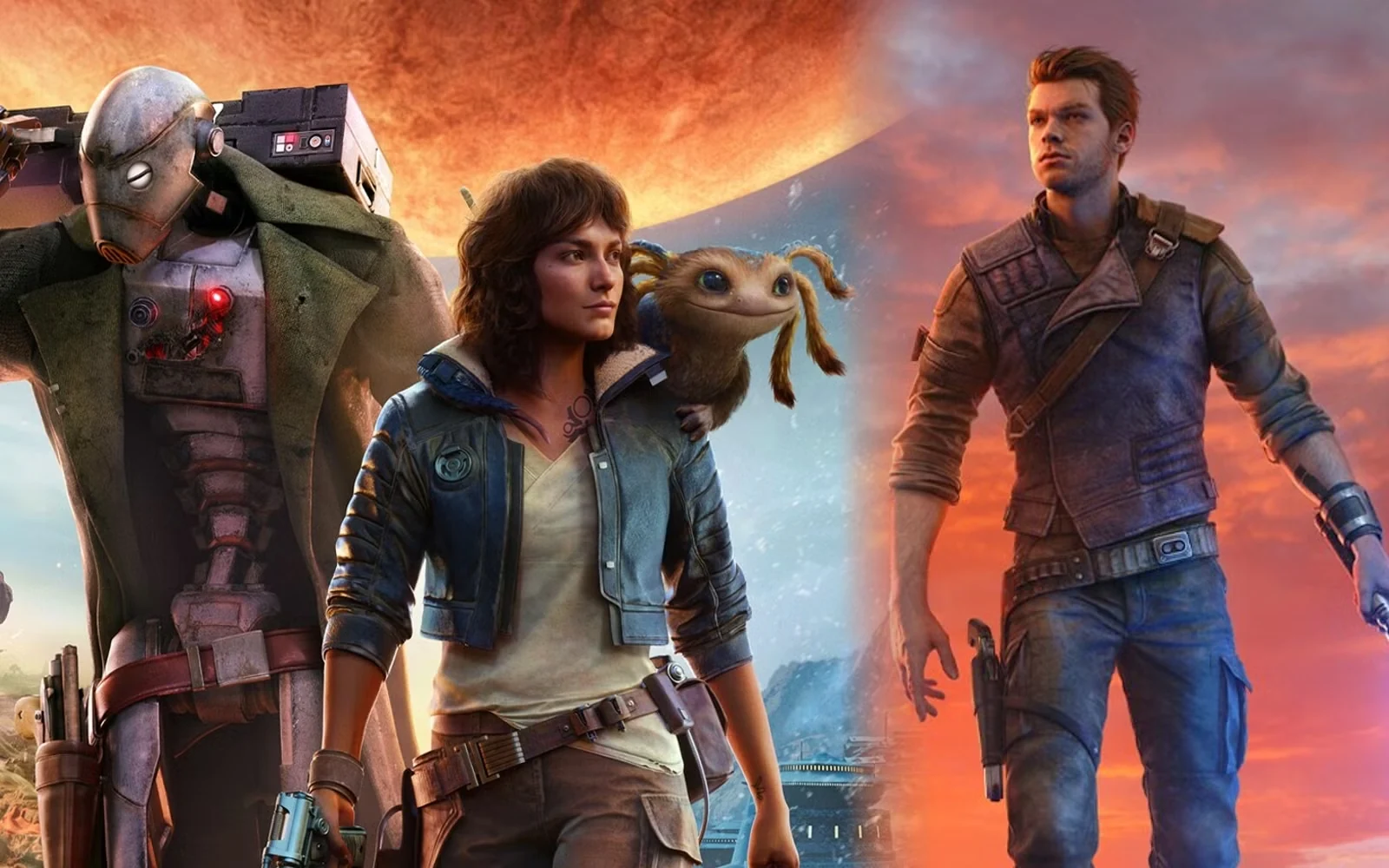
The return of variety does not mean Star Wars is abandoning the traditional single-player adventure. On the contrary, the Jedi series remains its strongest foundation.
With Star Wars Jedi: Survivor, Respawn continued the story of Cal Kestis, a former Padawan hunted by the Empire. Lightsaber combat, exploration, Force abilities and a coming-of-age story form a familiar formula, but one that is particularly effective when handled well. The game received very favourable reviews, although technical problems affected its launch, especially on PC.[12][13][14]
The strength of Jedi lies in its simplicity. Players immediately know what they are coming for: the experience of being a Jedi in a dark period, with a personal story strong enough not to need constant connections to the films' heroes.
Star Wars Outlaws tried a different route. Ubisoft Massive places Kay Vess, a scoundrel, at the centre of an open world set on the galaxy's criminal fringes. The appeal of Outlaws lies in its perspective: Kay Vess is neither Jedi nor Sith, but a smuggler looking for her place among crime syndicates, dangerous contracts and the power struggles of the galactic underworld.[15][16]
The execution proved more divisive. Outlaws was appreciated for its atmosphere, planets, speeder journeys and the way it brings that underworld to life. But it did not receive the same enthusiasm as Jedi: Survivor. Reviews were generally decent, with reservations about certain gameplay systems, stealth and technical performance at launch. Its director, Julian Gerighty, acknowledged being disappointed by the initial scores.[16][17]
That does not make it a bad game. It simply reminds us that a vast Star Wars open world is not enough on its own. It still needs the activities, pacing and protagonist to justify the dozens of hours it asks of players.
Hunters: the necessary counterexample
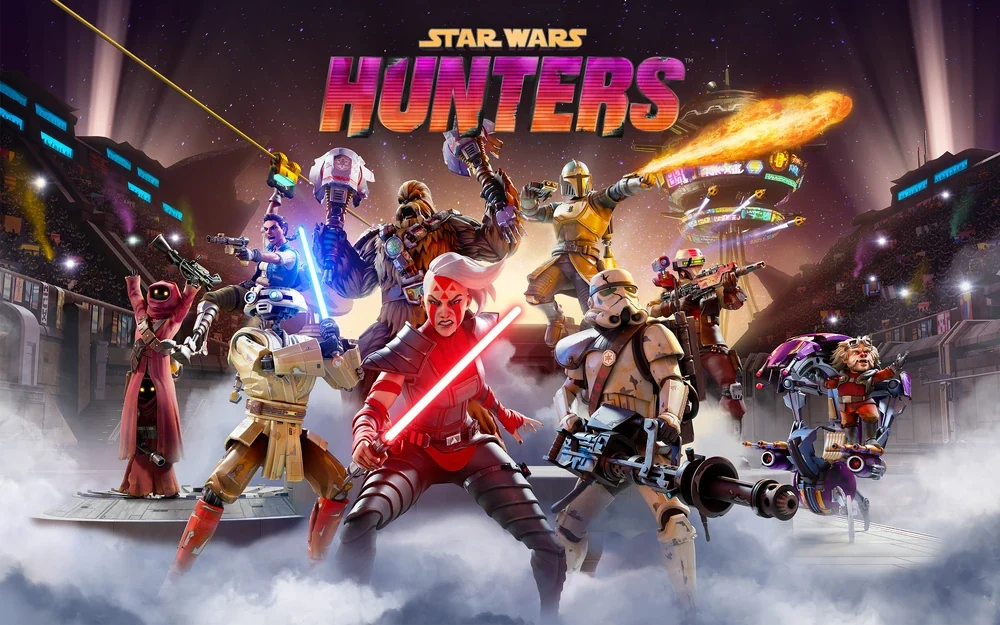
To understand how far things have come, we also need to look at what did not work.
Star Wars: Hunters, released in 2024, started with an easy-to-understand idea: adapt Star Wars to the competitive hero shooter format. Characters with distinct abilities, quick team battles and a free-to-play model might have seemed well suited to a franchise full of bounty hunters, soldiers, droids and unusual fighters.[18]
The result did not win critics over. The game has an OpenCritic average of 58/100, with only 36% of the surveyed critics recommending it. Reviews pointed to its lack of character compared with the genre's leading games and the overly prominent place given to microtransactions.[19][20]
Hunters is a useful example because it keeps this story from becoming too neat. Star Wars does not magically succeed whenever it changes genre. The franchise name attracts attention, but it cannot replace a strong gameplay idea, art direction or a tolerable business model.
That is also the difference between using Star Wars as a backdrop and using the galaxy to create an experience that would not feel the same anywhere else.
Eclipse and KOTOR: the promises are still waiting
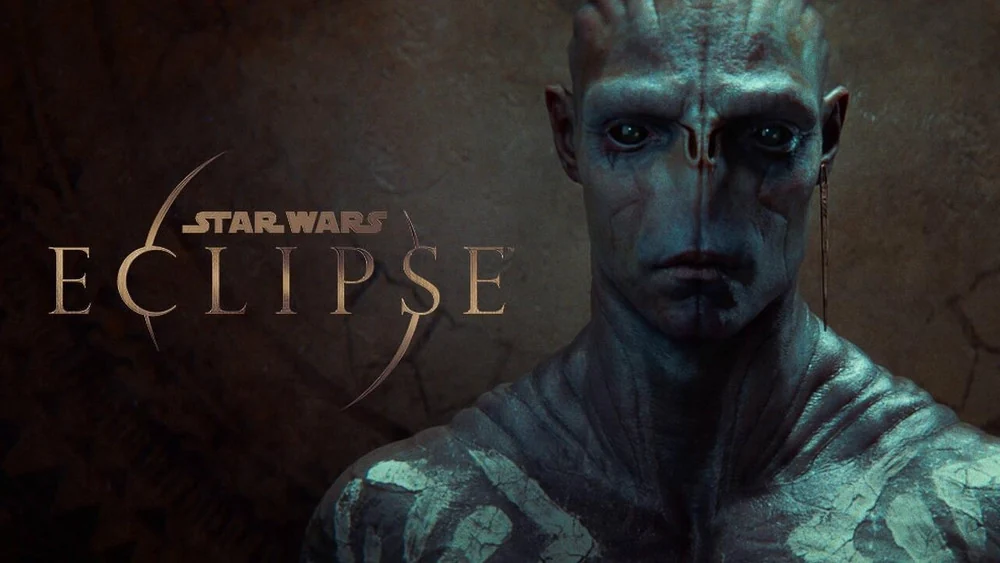
The current momentum is encouraging, but some of the most anticipated projects remain less clear.
Star Wars Eclipse, developed by Quantic Dream, takes place during the High Republic. It promises an action-adventure with branching choices, built around several playable characters whose paths intersect. That approach fits Quantic Dream's identity, established through games such as Heavy Rain and Detroit: Become Human.[21]
On paper, it is an intriguing project. The High Republic is still little explored in video games. A Star Wars game built around player decisions and narrative consequences also creates room for something different from traditional action adventures.
For now, though, Eclipse remains a promise. There is no publicly announced release date. Eclipse remains one of the most intriguing Star Wars projects, particularly because it explores the High Republic through a branching narrative. But neither a release date nor an extended gameplay demonstration has been shared.[21]
The remake of Star Wars: Knights of the Old Republic falls into the same category. Its announcement alone was enough to create huge expectations: the original remains a landmark Western RPG, particularly for its companions, moral choices and a Star Wars story set far away from the films.[22]
Yet the remake remains very quiet. No firm schedule or gameplay demonstration currently tells us when, or in what form, it will arrive. It is one of the most eagerly desired Star Wars projects, but it needs to be treated as what it is at this point: an officially identified project, rather than a game close to release.[22][23]
The Old Republic still has a future
The pleasant surprise may come from another RPG project: Star Wars: Fate of the Old Republic. Announced in December 2025, this single-player action RPG is being developed by Arcanaut Studios with Lucasfilm Games. It is led by Casey Hudson, director of the first KOTOR and a key figure behind the Mass Effect trilogy.[24][25]
Fate of the Old Republic has all the makings of a spiritual successor to KOTOR. Casey Hudson, who directed the original Knights of the Old Republic before leading the Mass Effect trilogy, is returning to the Old Republic for a new narrative RPG. The game will not directly continue the story of Revan or the 2003 game's companions: it will introduce a new story and new characters in another part of that era.[24][25]
The announcement matters because it shows Lucasfilm Games is doing more than looking in the rear-view mirror. The KOTOR remake responds to nostalgia. Fate of the Old Republic could give the Star Wars RPG a future again.
Another narrative project is in development at Skydance New Media, Amy Hennig's studio. Announced in 2022, it remains mysterious, with no title, release date, platforms or detailed story setting revealed. All we know is that it is an original action-adventure created with Lucasfilm Games.[26][27]
At this stage, Skydance has not revealed the game's title, timeline setting or release date.
One franchise, many paths
That may be the most exciting conclusion. Star Wars is not becoming interesting again by turning into one particular kind of game. It is becoming interesting again because it offers several ways in.
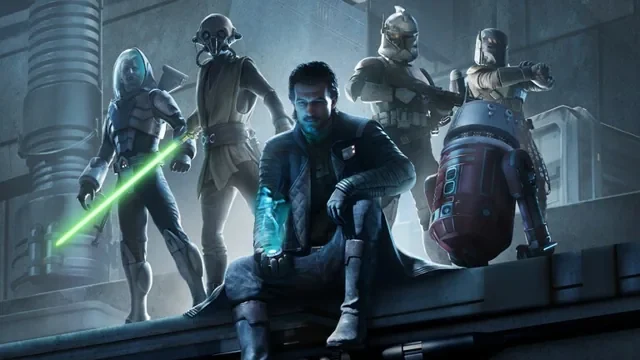
After Zero Company, you might feel like playing XCOM 2, Gears Tactics, Fire Emblem: Three Houses or Marvel’s Midnight Suns. The same player might then explore their interest in the Clone Wars era through The Clone Wars series.
After Galactic Racer, recommendations could take you towards Wipeout Omega Collection, F-Zero 99, Redout 2 or BallisticNG.
Those who enjoyed Cal Kestis's story could continue with God of War and God of War Ragnarök for their narrative adventures and close-range combat, or the three latest Tomb Raider games for ancient environments, puzzles and platforming.
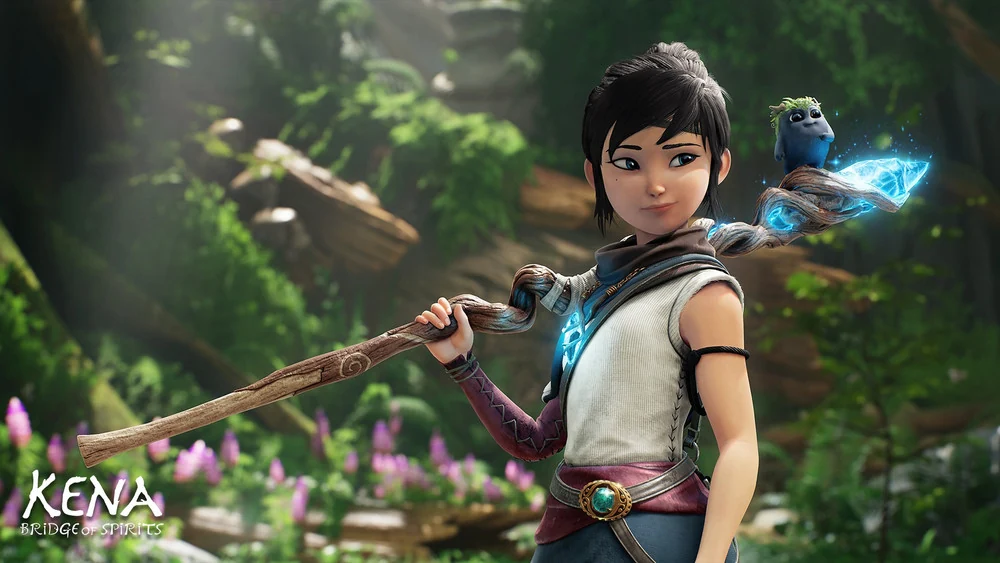
Star Wars Jedi: Survivor could also lead to Darksiders III, Kena: Bridge of Spirits or Sekiro: Shadows Die Twice, depending on whether exploration, the rhythm of combat or demanding encounters appealed most.
That is the value of recommendations that go beyond a franchise name. What matters is not simply that you liked Star Wars. It is understanding what you liked: strategy, racing, exploration, narrative choices or the pleasure of bringing a group of characters together.
On Gemster, a work can become the start of a cultural journey rather than an isolated destination.
Conclusion
Star Wars games have not returned to their golden age. Not yet. But they have regained something more valuable than a succession of major launches: the freedom to be different from one another.
Jedi: Survivor remains a strong single-player adventure. Zero Company shows that tactics can tell Star Wars stories differently. Galactic Racer puts racing back at the centre of the galaxy. Outlaws widens the view to smugglers and syndicates, with an imperfect but necessary result. Hunters, meanwhile, reminds us that a universe alone never makes a good game.
What comes next will depend on projects such as Eclipse, the KOTOR remake, Fate of the Old Republic and Skydance New Media's game. They hold enormous potential, but also call for caution: for now, there are still more promises than release dates.
That may be the best way to look at Star Wars in video games today. The galaxy has not been fully rebuilt. But it has started exploring again.
FAQ
What are the best recent Star Wars games?
Star Wars Jedi: Survivor is a good choice for single-player action-adventure. Star Wars Zero Company is aimed at turn-based strategy fans. Star Wars: Galactic Racer, released on October 6, 2026, received very favourable early press reviews; that should be distinguished from its longer-term reception among players.[6][10][12][28][29]
Is Zero Company connected to Jedi: Fallen Order?
Which Star Wars games are coming next?
Officially known projects include Quantic Dream's Star Wars Eclipse, the Knights of the Old Republic remake, Arcanaut Studios' Star Wars: Fate of the Old Republic and the narrative action project developed by Skydance New Media with Amy Hennig. Not all have publicly announced release dates.[21][22][24][26]
Sources and references
- [1] Command the Clone Wars'™ Most Cunning Operatives in Star ...
- [2] Star Wars Zero Company release, platforms, and specs guide
- [3] Catch Star Wars Zero Company in Action in New Final Trailer
- [4] Hands-on report: Star Wars Zero Company
- [5] Avoid Permadeath in Star Wars: Zero Company
- [6] Star Wars: Galactic Racer - Release Date, Trailer & Interview
- [7] Star Wars: Galactic Racer - Story Trailer
- [8] Star Wars Games Deals | StarWars. ...
- [9] Star Wars: Galactic Racer Critic Reviews - OpenCritic
- [10] Star Wars: Galactic Racer Reviews Say It’s an All-Time Great Racing Game
- [11] Galactic Racer Is One Of The Highest-Rated Star Wars Games Of All ...
- [12] Star Wars Jedi: Survivor Reviews
- [13] Star Wars Jedi: Survivor critic reviews - Metacritic
- [14] Review Roundup For Star Wars Jedi: Survivor
- [15] Star Wars Outlaws - Wikipedia
- [16] Star Wars Outlaws Director 'A Little Disappointed' by Its ...
- [17] Star Wars Outlaws Director is “a Little Disappointed” with its Metacritic Score
- [18] Star Wars: Hunters Review - Pixelkin
- [19] Star Wars: Hunters Reviews - OpenCritic
- [20] Star Wars: Hunters review - quicker, easier, more seductive
- [21] Star Wars Eclipse | Game
- [22] Star Wars: Knights of the Old Republic
- [23] Star Wars Games + Apps
- [24] Star Wars: Fate of the Old Republic | Game
- [25] Star Wars: Fate of the Old Republic Trailer & Interview
- [26] Amy Hennig and Skydance New Media Creating New Star Wars Game
- [27] _Star Wars_: Best of 2022
- [28] Star Wars Zero Company — available now
- [29] StarWars.com — Galactic Racer available since October 6, 2026